For many of you, your custom build is not just a house. It is the place where your children will grow up. It is the place where you will host Thanksgiving dinners. It is the place where you will finally feel like you have a sanctuary of your own.
However, when you are building the rain falls on many job sites across our beautiful East Tennessee hills. We know that when you drive by your future home and see the wood getting soaked by a summer thunderstorm, your heart might sink. You might worry that your dream is being ruined before it is even finished.
We want to put your mind at ease.
Today, we are going to talk about engineered lumber moisture resistance during construction. We are going to look at why your home is tougher than you think. This guide is for you, the person who wants to make sure every detail of their new home is perfect. Let’s talk about how modern science keeps your home strong, even when the clouds open up.
The Science of Resistance: How Engineered Lumber is Made
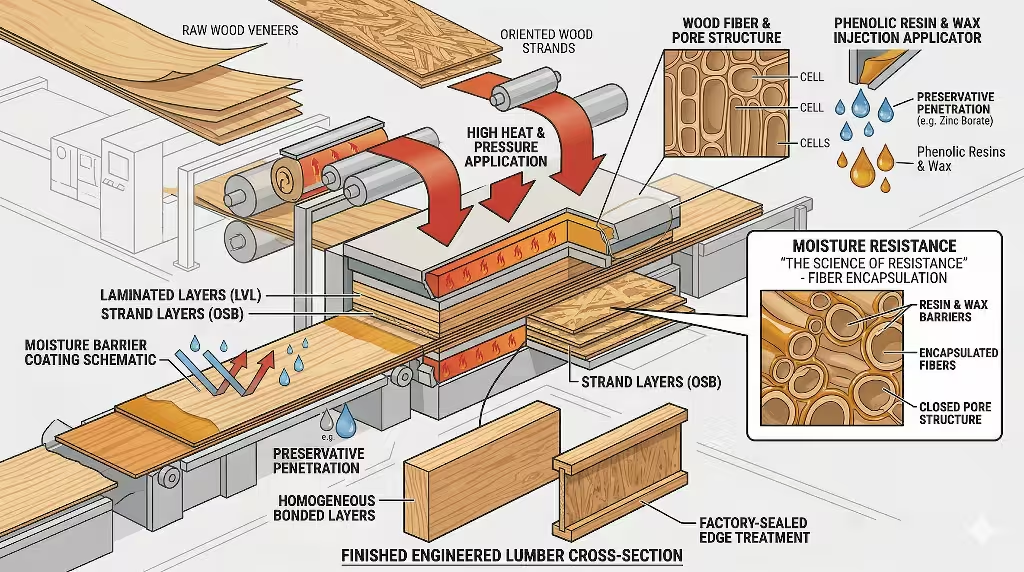
When we talk about engineered lumber moisture resistance during construction, we are talking about a very smart piece of technology. Many people think engineered wood is just scraps of wood glued together. While it does use smaller pieces of wood, the way it is put together is very advanced.
Imagine you are baking a cake. If you just had flour, it would blow away in the wind. But when you add eggs and oil and bake it, it becomes something solid. Engineered wood is a bit like that. It uses real wood fibers, but it adds special resins and waxes. These are not just any glues. They are high-tech binders called phenolic resins. During the manufacturing process, these resins are mixed with the wood. Then, the wood is pressed under massive amounts of heat and pressure.
This process creates a bond that is actually stronger than the wood itself. The resins act as a shield. They wrap around the wood fibers. This is the secret to engineered lumber moisture resistance during construction. The wax that is added during the process also helps. Just like water beads up on a waxed car, the wax in the wood helps shed water. This prevents the water from soaking deep into the wood right away.
We also use something called zinc borate in many of these products. This is a mineral that helps protect the wood from mold and bugs. When you combine the resins, the wax, and the minerals, you get a product that is designed to live outdoors for a little while. Even though it looks like wood, it behaves like a much more stable material. This is why we trust it for your home.
Material Specifics: OSB vs. LVL vs. Glulams
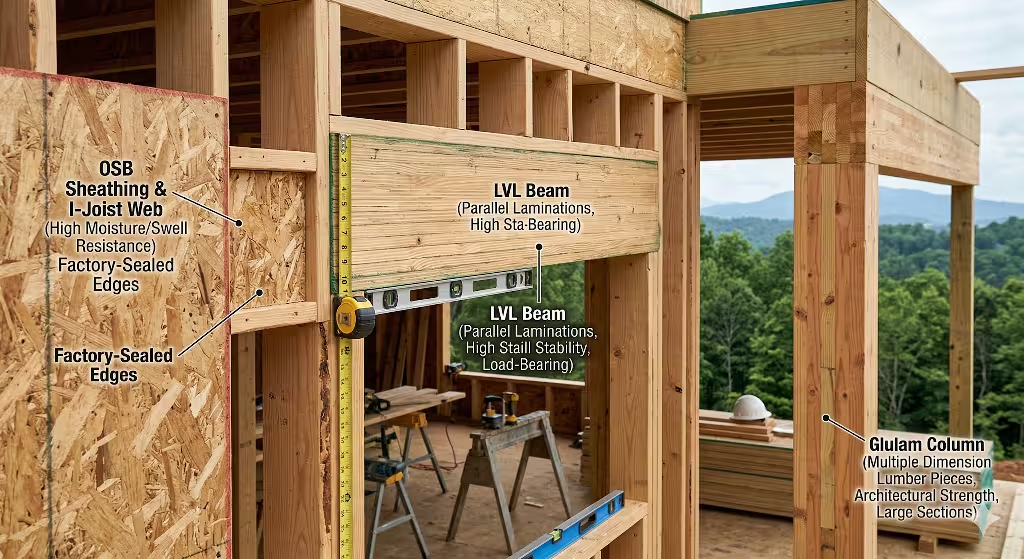
Not all wood in your home is the same. Each piece has a different job to do. Because of this, each piece handles water a little differently. Understanding these differences is part of understanding engineered lumber moisture resistance during construction.
First, let’s talk about OSB. This stands for Oriented Strand Board. You usually see this on your walls and your roof. It looks like big flakes of wood pressed together. OSB is very good at staying flat. However, the edges are where you have to be careful. The edges are the most likely place for water to get in. Most good builders will use OSB that has a special coating on the edges. This coating is a big part of engineered lumber moisture resistance during construction. It keeps the edges from swelling up like a sponge.
Next, we have LVLs. This stands for Laminated Veneer Lumber. These are the heavy beams that hold up your big open ceilings. They are made of thin layers of wood glued together. LVLs are incredibly strong. Because they are so dense, they actually have very good engineered lumber moisture resistance during construction. Water has a hard time getting past the first layer of glue.
Then there are Glulams. These are beautiful beams often left visible in a home. They are made of larger pieces of wood glued together. While they are strong, they can be a bit more sensitive to rain than an LVL. We usually try to keep these covered as much as possible. Knowing which material is which helps us know how to protect your home. It is all about using the right tool for the right job.
Does engineered lumber get ruined if it gets wet?
This is a question often asked most often by nervous homeowners. The short answer is no. Getting wet during a rainstorm does not ruin your home. Engineered lumber moisture resistance during construction is designed specifically for this period of time.
Think about a rain jacket. If you wear it in a storm, you stay dry. If you jump into a lake and stay there for three days, you might eventually get wet. Engineered wood is the same. It is designed to handle rain and snow for the few weeks or months it takes to get the roof on. This is what we call the “dry-in” phase.
The resins we talked about earlier keep the wood from falling apart. You might see the wood change color a little bit. It might turn a soft gray. This is normal. It is just the sun and rain reacting with the very top layer of wood. It does not mean the beam is weak.
The only time we worry is if the wood stays under water for a very long time without a chance to dry out. If a beam is sitting in a deep puddle for a month, it might start to swell. But as long as the water can run off and the sun can come out to dry it, the engineered lumber moisture resistance during construction will do its job. Your home is built to survive the building process.
How long can engineered lumber be exposed to rain?
Time is a big factor when we talk about engineered lumber moisture resistance during construction. Most manufacturers build their products to be exposed to the weather for about 30 to 90 days. In our part of Tennessee, we try to get a house under a roof much faster than that.
The weather in the Tri-Cities can be tricky. We have very humid summers and wet winters. This means the wood does not always dry out as fast as it would in a desert. Because of this, we pay close attention to the calendar. If we know a big storm is coming and the roof is not on yet, we make sure the water has a way to get out of the house. We don’t want it pooling on the floors.
Engineered lumber moisture resistance during construction is a window of safety. It gives the builders enough time to work carefully without rushing. If the wood is exposed for longer than three months, we start to do extra checks. We look for any signs that the wood layers are starting to separate. This is called delamination. But in almost every custom home build, we finish the roof long before the engineered lumber moisture resistance during construction runs out. You have a safety net built into the materials themselves.
The 18 Percent Rule: Testing for Moisture Content
When your home is being built, builders use a very important number: 18 percent. This is the limit for moisture in your wood.
Before we put insulation in your walls or hardwood on your floors, we must check the wood. We use a tool called a moisture meter. This tool has two little metal pins that we press into the wood. It sends a tiny electric current through the wood to see how much water is inside. This is how we verify that the engineered lumber moisture resistance during construction has done its job and that the wood is now dry.
If the meter says the wood is above 18 percent, we wait. We do not cover it up. If you put insulation over wet wood, you trap the water. That is how you get mold. We want your home to be healthy. By waiting until the wood is below 15 or 18 percent, we ensure that the structure is stable.
Engineered lumber moisture resistance during construction keeps the wood from getting too wet in the first place. This makes the drying process much faster. Once the wood is dry, it stays dry for the rest of its life inside your finished walls. This step is where precision and integrity really matter. I always tell people to make sure their builder is actually using a meter, not just guessing with their hands.
Is engineered lumber more moisture resistant than solid wood?
This is a great debate in the building world. Some people love old-fashioned solid timber. I like it too, but engineered lumber has some big advantages. When it comes to engineered lumber moisture resistance during construction, the “man-made” stuff often wins.
Solid wood is like a bundle of straws. Water can move up and down through the grain very easily. If a solid 2×4 gets wet, it might twist or bow as it dries. We have all seen a piece of wood that looks like a corkscrew. That happens because the wood cells shrink unevenly.
Engineered wood is different. Because it is made of layers or strands that go in different directions, it is very stable. It does not want to twist. The resins we use in engineered lumber moisture resistance during construction also act as a barrier that solid wood doesn’t have. Solid wood has no “glue” to block the water from going deep.
While solid wood might dry out a little faster because it is more porous, engineered wood is less likely to change shape. In a modern home, we want straight walls and level floors. Engineered lumber moisture resistance during construction helps us keep everything straight and true, even if it gets rained on during the first month of the build.
Proactive Moisture Management on the Job Site
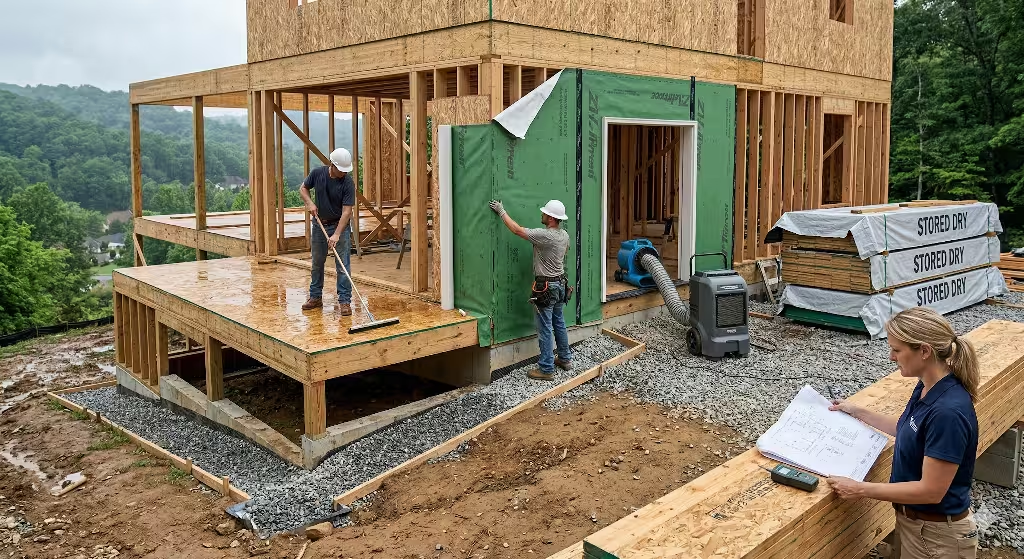
Even though we have engineered lumber moisture resistance during construction, we don’t just leave things to chance. A good builder is like a good captain of a ship. They watch the weather and they prepare.
One of the biggest things we do is manage the site drainage. We make sure the ground around your home slopes away from the foundation. We don’t want your house sitting in a pond. If water gets into the crawlspace or the basement, we pump it out. This helps the air stay dry, which helps the wood stay dry.
We also use “house wrap.” This is the white or green fabric you see on the outside of houses before the siding goes on. It is a very special material. It keeps liquid water out, but it lets water vapor escape. It’s like a high-end raincoat for your house. This is a partner to engineered lumber moisture resistance during construction. It adds another layer of safety.
Sometimes, we use tarps. But we have to be careful. If you wrap a wet beam in a tarp and the sun comes out, you create a “sauna.” This can actually make things worse. We prefer to let the wind blow through the house. Air is the best tool we have for drying. We make sure there is plenty of ventilation so the engineered lumber moisture resistance during construction can work properly as the wood breathes.
Solutions for Wet Lumber: The Dry-Out Protocol
What happens if we have a really wet season? Maybe it rains for two weeks straight in Johnson City. We have a plan for that. We call it a dry-out protocol. This is how we support the engineered lumber moisture resistance during construction when nature is being difficult.
First, we clear out any standing water. We use big squeegees to push water off the subfloors. Then, we bring in the big guns. These are industrial-sized fans and dehumidifiers. We set them up throughout the house. By moving a lot of air, we help the moisture evaporate out of the wood.
If some of the OSB edges have swollen a little bit, we don’t panic. Once the wood is completely dry, we use heavy-duty sanders to make the floor perfectly flat again. This ensures your hardwood floors won’t have bumps.
The engineered lumber moisture resistance during construction gave us the time we needed. Now, the dry-out protocol ensures the house is ready for the “finish” stage. It is all about being proactive. We don’t just hope the wood dries. We make sure it dries. This gives you the peace of mind that your home is being built with the highest standards of competence.
Protecting Your Investment for the Long Term
When you think about engineered lumber moisture resistance during construction, try to think of it as a bridge. It is a bridge that carries your home from being a pile of materials to being a finished sanctuary. It is a technology that protects your money and your family’s future.
Building in the Tri-Cities is a wonderful experience. Our landscape is beautiful, and our communities are strong. But our weather requires us to be smart. You deserve a home that is built to last for a hundred years. That starts with understanding the science of the materials.
By using products with high engineered lumber moisture resistance during construction, your builder is showing they care about quality. They aren’t just looking for the cheapest wood. They are looking for the best wood. This protects the integrity of the structure. It means your doors will close properly. It means your floors won’t squeak. It means your home will be the safe haven you dreamed it would be.
Why Precision and Integrity Matter in Building
We have always believed that how you do anything is how you do everything. If a builder is lazy about engineered lumber moisture resistance during construction, they might be lazy about the electrical work or the plumbing too. That is why I talk so much about these technical details.
When you are looking at your job site, look for the little things. Is the lumber stacked off the ground? Are the edges of the OSB painted? Is there a moisture meter nearby? These are the signs of a professional. These are the signs of someone who respects the engineering that goes into a modern home.
Your home is a big puzzle. Every piece needs to fit perfectly. Engineered lumber moisture resistance during construction is just one piece of that puzzle, but it is a very important one. It is the foundation of a healthy home. It keeps the “bones” of your house strong while the “skin” is being put on.
As you move forward with your build, remember that you have the right to ask questions. Ask your builder about engineered lumber moisture resistance during construction. Ask them how they plan to dry the house out. A good builder will be happy to explain it to you. They will have a calm demeanor, just like I do, because they know they are doing things the right way.
Integrity You Can Build On
Building a home is a big task. It can be stressful, but it should also be joyful. Seeing your home take shape is a miracle of sorts. Do not let a rainy day in Tennessee steal that joy from you. The science of engineered lumber moisture resistance during construction is on your side.
Your home is being built with materials that are tougher than they look. They are designed to handle the elements. They are designed to stay strong. My goal today was to help you understand the “why” behind the wood. I wanted to show you that there is a lot of thought and engineering protecting your investment.
When you finally move into your new home in Kingsport or Johnson City, you can look at your walls and know they are solid. You can walk on your floors and know they are dry and stable. You can sleep soundly knowing that engineered lumber moisture resistance during construction did its job when it mattered most.
Building a home is about more than just wood and nails. It is about building a life. I hope this guide helps you feel more confident as you watch your dream come true. You are doing a great job, and your home is going to be wonderful.