When people look for a place to build or buy a home in East Tennessee, they often ask about schools, floor plans, and square footage. Yet, very quickly, the conversation turns to lifestyle. Families want to know where they can take a stroller on a Saturday morning, where they can walk their dog safely after work, and where they can find quiet green space close to home.
In Sullivan County, one of our
Quick Trail Snapshot: Distance, Surface, and Essential Stats
Before packing up your walking shoes or loading the kids into the car, it helps to understand the physical profile of the path. The Wes Davis Greenway covers a total distance of 2,800 linear feet, which is approximately 0.53 miles one way. When you walk it out and back, you complete a pleasant stroll of just over one mile.
The surface of the Wes Davis Greenway is continuous, well-kept asphalt. As a builder who inspects concrete and paving work regularly, I appreciate the smooth, uniform finish here. There are no loose gravel patches, dirt washouts, or exposed roots that might trip small feet or catch stroller wheels.
Elevation change along the trail is practically zero. Because it sits on an old railroad bed, the grade remains under two percent along its entire run. That gentle topography makes the Wes Davis Greenway accessible for users of every age and fitness level, from toddlers on balance bikes to grandparents using walkers.
| Metric | Specification |
| Trail Length | 0.53 miles one way (approx. 2,800 feet) |
| Surface Type | Paved asphalt and timber bridge decking |
| Trail Category | Urban rail-trail and linear city park |
| Difficulty Level | Easy and flat |
| Location | Bristol, Sullivan County, Tennessee |
| North End Point | Anderson Street (near Bristol Municipal Center) |
| South End Point | Melrose Street |
| Primary Features | Historic train cars, Beaver Creek bridges, shaded canopy |
Trailhead Access, Parking, and Safe Wayfinding
Finding safe, easy parking is usually the first concern for mothers, caregivers, and solo walkers. Fortunately, the Wes Davis Greenway offers very straightforward access on its northern end.
The primary parking area sits directly across from the northern trailhead at the Bristol Municipal Center along Anderson Street. This lot is paved, marked clearly, and well-lit by municipal fixtures. Parking at a public government center gives solo walkers and parents an added sense of security. You do not have to park along a dark shoulder or in an isolated field. From the parking lot, you use a marked pedestrian crossing to reach the entrance of the Wes Davis Greenway.
The southern terminus of the trail ends at Melrose Street. This end is nestled closer to quiet residential streets. While there is no dedicated parking facility at Melrose Street, it serves as an easy walk-in point for residents who live in the surrounding neighborhoods. For those arriving by vehicle, starting at Anderson Street is the best recommendation.
History in Motion: From Historic Rail Bed to Urban Linear Park
Like many great greenways across Tennessee, the Wes Davis Greenway owes its existence to the golden age of American railroads. In the nineteenth and early twentieth centuries, Bristol grew as a
The path of the Wes Davis Greenway follows an abandoned rail line that once connected
The city named the park in honor of Wes Davis, a dedicated local leader who worked to improve Bristol through public service and recreation. Near the trail entrance, visitors will find a dedicated seating plaza with a commemorative plaque and benches honoring his contributions to the community.
The railroad history comes alive through preserved rolling stock parked beside the trail. Walkers can view an authentic Pullman passenger coach named “Bristol,” which measures 85 feet long and 10 feet wide. Beside the passenger car sits a classic red bay-window caboose from the Southern Railway era. The park also features a metal locomotive silhouette near the entrance. These historical features give the Wes Davis Greenway a distinct character that sparks curiosity in both children and history buffs.
The Route Experience: Bridges, Creek Crossings, and Green Canopy
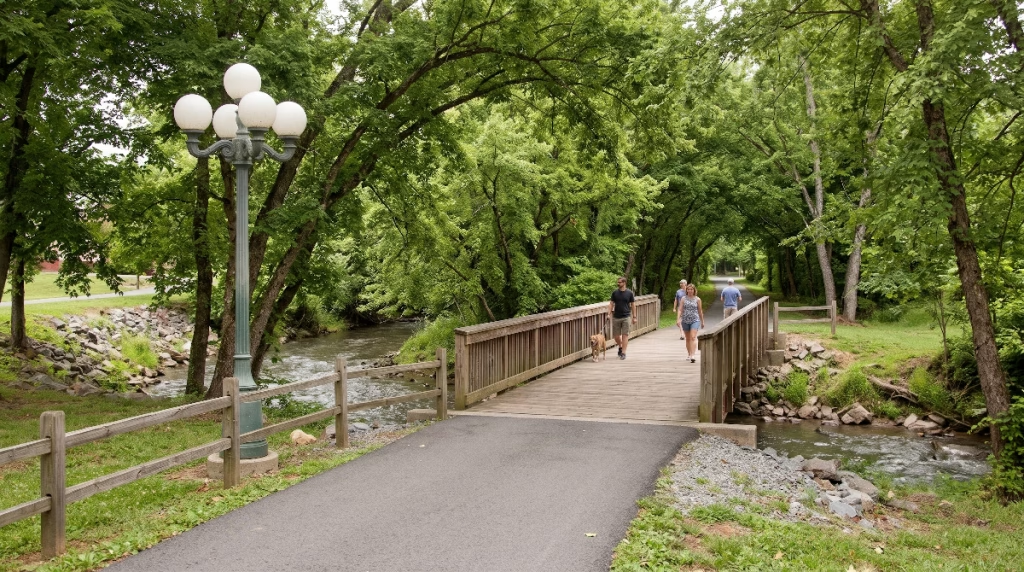
Walking the Wes Davis Greenway gives you an enjoyable mix of open green space and shaded woodland. Even though you are minutes from busy city streets, the trail creates a peaceful, sheltered pocket where the noise of traffic quickly fades.
One of the highlights of the Wes Davis Greenway is crossing Beaver Creek on two separate footbridges. The northern crossing uses an original railroad trestle that measures 120 feet long and 14 feet wide. The city retrofitted the trestle with heavy timber deck boards and sturdy safety railings. Walking across this wide wooden deck gives you a clear look down into the running water below.
Further along the path, you reach the second crossing, which features a 109-foot steel and wood pedestrian bridge built by Steadfast Bridges. This structure replaced an older trestle that had been lost years ago. The transition between asphalt and bridge decking is smooth, making it effortless to push a stroller or ride a cruiser bike.
Thirty-two vintage-style cast aluminum lamp posts illuminate the Wes Davis Greenway. Each post features five-globe lighting clusters set on concrete pillars, adding charm and warm evening visibility. Along the path, walkers can rest on plastic-coated metal benches that offer views of the creek and mature trees.
Family, Stroller, and Pet Friendliness: A Local Practical Perspective
When evaluating parks for families, always look at sightlines, surface safety, and ease of use. From a mother’s and builder’s viewpoint, the Wes Davis Greenway rates very high for family outings.
Because the trail is flat and paved with smooth asphalt, it accommodates strollers with ease. You will not struggle with front wheels getting stuck in mud, and you do not need heavy-duty air tires to have a comfortable walk. The bridge railings are built with tight vertical spacing, giving parents peace of mind when curious toddlers pause to watch ducks swimming in Beaver Creek.
The distance of the Wes Davis Greenway is another plus for families. A half-mile out and a half-mile back is the perfect length for young children. It is long enough to let them burn off energy, but short enough to avoid overtired meltdowns halfway through your walk.
Dogs are welcome on the Wes Davis Greenway as long as they remain on a standard leash. The city has installed pet waste disposal stations and covered trash receptacles along the route to keep the grounds clean. The open grassy shoulders give dogs room to sniff without crowding other trail visitors.
Natural Features and Hydrology Along Beaver Creek
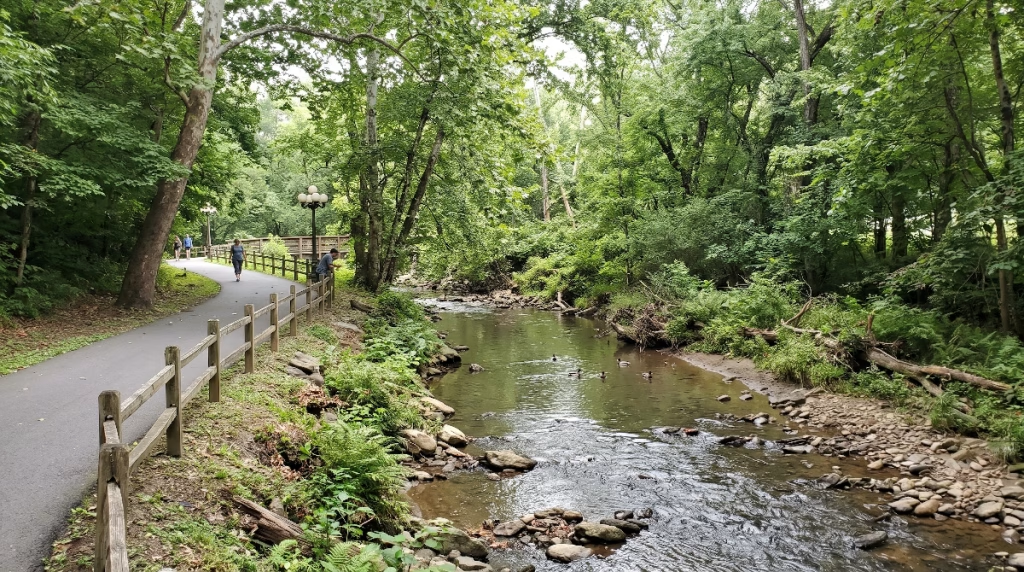
Even within an urban setting, water defines the landscape. Beaver Creek winds directly alongside the Wes Davis Greenway, acting as both a visual feature and a vital local drainage corridor.
The creek supports a healthy riparian buffer of mature native trees. You will see American sycamores with their distinctive mottled white bark, along with river birch and green ash trees lining the banks. These mature trees provide a high canopy that shades the Wes Davis Greenway during hot summer afternoons. The foliage helps drop the temperature along the path by several degrees compared to open asphalt streets.
This corridor of trees and running water attracts local wildlife. Walkers along the Wes Davis Greenway frequently spot songbirds, kingfishers, and mallards near the water. During the spring months, the grassy borders fill with native wildflowers, creating a pleasant contrast between civil rail architecture and natural river bottom ecology.
Safety, Comfort, and Accessibility Standards
When builders inspect home sites or public projects, safety and accessibility are always top priorities. The Wes Davis Greenway demonstrates how thoughtful city planning creates safe community recreation.
The clear sightlines along the trail are one of its best design features. Because the corridor was built for trains, there are no blind turns, hidden recesses, or dense overgrown thickets directly against the asphalt. You can see far ahead down the path at almost all times. For women walking alone or parents keeping an eye on energetic kids, these long sightlines provide comfort and security.
Proximity to the Bristol Municipal Center on Anderson Street ensures regular city presence and easy emergency access. The five-globe light fixtures along the bridges and sitting areas extend safe walking hours into the early evening. Furthermore, the city maintains the asphalt surface and split-rail fencing, ensuring that trip hazards are addressed promptly.
With wide paths, flat grades, and barrier-free access points at both ends, the Wes Davis Greenway meets broad accessibility standards. It offers individuals with mobility challenges a safe place to enjoy fresh air in a calm setting.
Future Connectivity: Regional Greenway Networks and Trails
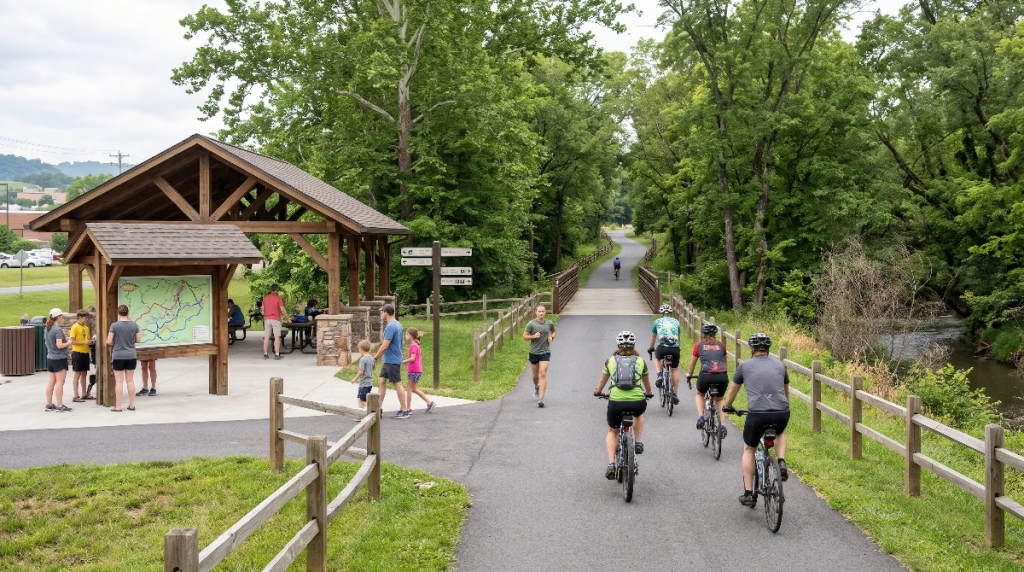
While the Wes Davis Greenway functions today as an independent neighborhood park, it represents an important link in a larger regional vision. Across the Tri-Cities, communities are working to connect local paths into broader trail systems.
The rail corridor used by the Wes Davis Greenway historically extended across the state line toward Mendota, Virginia. Regional planning groups have long studied options to tie this trail into broader pedestrian networks connecting downtown Bristol, Steele Creek Park, and regional greenway routes.
As cities invest in alternative transportation, trails like the Wes Davis Greenway will become increasingly valuable. They provide off-street pathways for commuters, cyclists, and fitness enthusiasts. In the coming years, local trail connectivity will continue to enhance the appeal of Bristol neighborhoods.
Frequently Asked Questions About the Wes Davis Greenway
How long does it take to walk the Wes Davis Greenway?
Most visitors complete the round-trip walk on the Wes Davis Greenway in 20 to 30 minutes at an easy, conversational pace. If you pause to read the historical marker or view the passenger train cars, plan for about 40 minutes.
Where should I park when visiting the greenway?
The most convenient and secure parking is located at the Bristol Municipal Center on the north side of Anderson Street. The trailhead begins right across the street.
Is the path suitable for road bicycles and roller skates?
Yes, the Wes Davis Greenway features a smooth asphalt surface that works well for road bikes, kids with training wheels, rollerblades, and non-motorized scooters. Because the trail is relatively short, cyclists often use it as part of a larger urban ride through Bristol.
Are there public restrooms on the greenway?
There are no dedicated standalone restroom buildings along the Wes Davis Greenway. Visitors can use public facilities at nearby city municipal offices during normal business hours, or stop at nearby businesses on Volunteer Parkway.
Can you go inside the historic train cars?
The Southern Railway Pullman coach and caboose on the Wes Davis Greenway are exterior display pieces preserved for viewing from the path. The interiors remain closed to general public access to protect the historic rolling stock from wear and weathering.
Is the greenway open year-round?
Yes, the Wes Davis Greenway remains open daily from dawn until dusk throughout the year, with free admission for all visitors.
Local Connection, Neighborhood Value, and Community Synergy
A home does not end at the property line. The value of a property is tied directly to the health, safety, and walkability of the neighborhood around it.
Linear parks like the Wes Davis Greenway add tremendous value to surrounding residential areas. They transform neglected industrial or rail corridors into clean, welcoming community assets. When homes are located within walking distance of the Wes Davis Greenway, homeowners enjoy higher quality of life, better options for daily exercise, and stronger community bonds.
The location of the Wes Davis Greenway also places you near the best of downtown Bristol. After taking a morning walk on the trail, you are only a two-minute drive or a short walk from State Street. You can pick up a fresh cup of coffee at a local roaster, browse independent shops, or visit the Birthplace of Country Music Museum.
Combining an easy stroll on the Wes Davis Greenway with an afternoon downtown is a wonderful way to experience the charm of Bristol. It highlights what makes life in the Tri-Cities so appealing: our respect for history, our love for the outdoors, and our dedication to building close-knit communities where families can thrive.