


In the Tri-Cities area of Tennessee, we have seen a big change in how people work. Many folks now work from home. Because of this, the demand for a private workspace has gone up. A backyard office is a great solution. It gives you a quiet place to focus. It also keeps your work life and home life separate. But building one is not just about putting up a simple shed. It is a real construction project. It requires planning, permits, and a clear budget.
Your New Workspace
Building a backyard office is a smart move for your home value. In the Tri-Cities, we have a unique climate and terrain. We have beautiful hills, but those hills can make site prep a bit tricky. We also have humid summers and cold winters. This means your office needs to be built well. It needs to be more than just a place to store lawnmowers. It needs to be a finished room.
In this guide, we will walk you through the costs. We will look at everything from the dirt under the building to the roof on top. We will talk about the rules in Johnson City, Kingsport, and Bristol. Our goal is to make sure you have a professional experience. I want you to feel confident when you talk to contractors. Let’s look at the numbers and the steps to make your backyard office a reality.
The Big Picture: What is the Total Cost?
When you ask about the cost of a backyard office, the answer depends on your goals. Some people want a simple spot to sit with a laptop. Others want a high-end studio with a bathroom and a coffee bar. In the Tri-Cities, we usually see costs lower than the national average. This is because our labor rates are fair.
A basic backyard office might cost you between $5,000 and $12,000. This is usually a DIY project. You buy a shell and finish the inside yourself. A mid-range office built by a pro will likely cost between $15,000 and $35,000. If you want the best of the best, you are looking at $40,000 to $65,000. This high-end office would have top-tier insulation and great windows. It would also have a high-quality heating and cooling system.
On average, you should plan to spend about $120 to $250 per square foot. This price covers a fully finished space. If you see a shed for $3,000 at a big-box store, remember that is just the shell. It has no power, no heat, and no finished walls. Turning that shell into a real backyard office takes more time and money.
Breaking Down the Cost Drivers

Site Prep and Foundation
Every good building starts with a solid foundation. In East Tennessee, the ground is rarely flat. If you live in the hills of Kingsport, you might need to move some dirt. Site prep is the first big cost for your backyard office. This includes clearing brush and grading the land. You might spend $1,200 to $4,000 just getting the land ready.
For the foundation, you have two main choices. A gravel pad is the cheapest option. It costs about $1 to $2 per square foot. However, for a backyard office, I often recommend a concrete slab. A slab is more stable. It costs about $6 to $12 per square foot. A slab keeps your office from shifting over time. If you want the building to last 30 years, go with concrete. It also makes it easier to install flooring like tile or hardwood.
Framing and Structure Costs
The frame of your backyard office is like its skeleton. In 2026, lumber prices have stabilized, but they are still a large part of the budget. Framing usually costs between $11 and $30 per square foot. This includes the walls, the floor joists, and the roof rafters.
You also need to think about the exterior. Siding is important for the look and the protection of the building. Vinyl siding is a budget-friendly choice at $3 to $7 per square foot. Wood siding or fiber cement looks better but costs more. Metal roofs are very popular in the Tri-Cities. They handle our heavy rain and occasional snow very well. A good roof for your office will cost between $300 and $600 per square (100 square feet) for materials.
Inside the Backyard Office: Insulation and Drywall
If you want to work in your backyard office all year, you must insulate it. Many people skip this to save money, but that is a mistake. Tennessee summers are very humid. Without insulation, your backyard office will be a sauna in July.
We suggest using spray foam insulation. It seals all the small gaps. This keeps the air inside and the bugs outside. Spray foam can cost more upfront, but it saves money on power bills. You can also use fiberglass batts, which are cheaper. Once the insulation is in, you will add drywall. Finishing the walls and ceiling makes the space feel like a real room. For a standard 10×12 backyard office, expect to spend $2,000 to $4,000 on interior walls and ceilings.
Electrical and Tech Needs
A backyard office is not much use without power. You need lights, outlets for your computer, and a way to get the internet. Running power from your main house to the office is a major step. You will need a licensed electrician.
The electrician will dig a trench and run a wire to a new sub-panel in the backyard office. This work usually costs between $1,500 and $3,500. For the internet, I suggest running a hard-wired Ethernet cable in the same trench. This gives you the fastest and most stable connection for video calls. Some people use Wi-Fi extenders, but a wire is always better for a professional backyard office.
Heating and Cooling: The Mini-Split System
Comfort is king in a backyard office. In Johnson City, our winters get cold and our summers are sticky. The best way to control the climate is a ductless mini-split system. These units are small and very quiet. They hang on the wall and provide both heat and air conditioning.
Installing a mini-split in your backyard office will cost between $2,000 and $5,000. It is much better than using a window AC unit or a space heater. A mini-split is very efficient.6 It will keep your office comfortable for pennies a day. Plus, it does not make a lot of noise while you are on a phone call.
Rules and Permits
Permitting in Johnson City, TN
If you live in Johnson City, you need to know the local rules. For any backyard office that is more than 200 square feet, you must have a building permit. Even if it is smaller, if you put it on a permanent foundation, you need a permit.
The cost for a permit in Johnson City for a $20,000 backyard office is about $350. You will also need to show a site plan. This plan shows where the building will sit on your lot. You must follow the setback rules. This means your backyard office cannot be too close to your neighbor’s fence. Usually, you need to stay at least 5 to 10 feet away from the property line. Always check with the Johnson City planning office before you start.
Zoning and Rules in Kingsport, TN
Kingsport has its own set of rules for a backyard office. The city cares about how the structure looks and where it is placed. If you are in a residential zone, your backyard office is called an accessory structure.
In Kingsport, you often have a 30-foot rear yard setback requirement. This can be a challenge if your yard is small. You also cannot cover more than 30 percent of your lot with buildings. If you already have a large house and a big garage, you might be close to the limit. Our advice is to get a professional survey. It is better to spend a little now than to have the city tell you to move your backyard office later.
Permitting in Bristol, TN
Bristol is a bit different. For a one-story backyard office used for storage or as a tool shed, you might be exempt from a building permit if it is under 200 square feet. But here is the catch. Once you add power or heat, it may no longer be just a “storage shed” in the eyes of the law.
In Bristol, any electrical or plumbing work requires a permit. This is for your safety. You do not want a fire in your backyard office because of bad wiring. The permit process ensures that a pro looks at the work. If you plan to spend more than $25,000 on your office, the state of Tennessee requires the contractor to be licensed. Always ask for proof of insurance from anyone working on your land.
The Impact of HOAs on Your Backyard Office
Many neighborhoods in the Tri-Cities have a Homeowners Association (HOA). These groups have their own rules. Sometimes their rules are stricter than the city’s rules. Your HOA might say your backyard office must have the same siding and roof as your house.
Before you buy materials for your backyard office, read your HOA covenants. You may need to submit your plans to a board for approval. If you build a backyard office without their okay, they can fine you. In some cases, they can force you to tear it down. It is advisable to get HOA approval in writing first.
Build vs. Buy: Which is Better?
You have two main paths to get a backyard office. You can buy a prefab kit or you can build it from scratch. A prefab kit is often faster. These are built in a factory and delivered on a truck. They can be a good base for a backyard office. However, they are often designed for storage. You will still need to add the insulation, walls, and power.
A custom-built backyard office is designed just for you. As an engineer, I prefer this route. It allows us to match the style of your home perfectly. We can also build it to higher standards. A custom backyard office will likely last longer and add more to your home’s resale value. It costs more, but the quality is much higher.
Maintaining Your Backyard Office
Once your backyard office is finished, you need to take care of it. Because it is a small building, it can be easy to forget. You should check the roof every year for leaks. Make sure the gutters are clear of leaves. In East Tennessee, we have many trees, so this is a big task.
You also need to keep an eye on the area under the building. Make sure water is flowing away from the foundation of your backyard office. If water pools there, it can rot the wood or crack the concrete. A little maintenance goes a long way. It protects the money you spent to build the backyard office in the first place.
Is a Backyard Office a Good Investment?
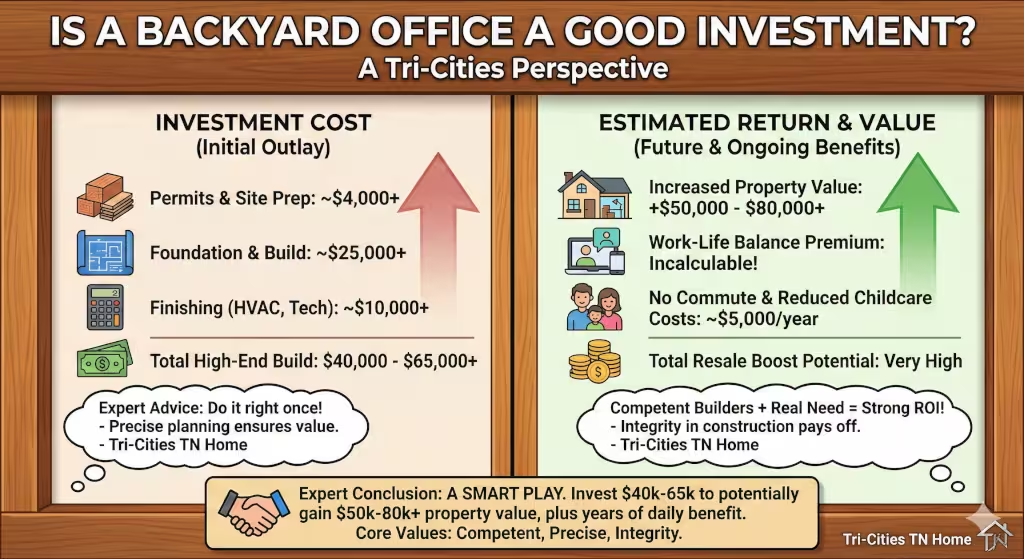
People often ask me if they will get their money back when they sell their home. In the current market, a well-built backyard office is a very good asset. Buyers love seeing a dedicated workspace. It makes your home stand out.
If you spend $30,000 on a high-quality backyard office, you might not get all $30,000 back in the home price right away. But it can make your home sell much faster. Plus, you get the benefit of using the space every day. If you pay for an office lease elsewhere, a backyard office pays for itself in just a few years.
The Importance of Natural Light

Working in a dark room is not fun. When we design a backyard office, we look at where the sun hits the yard. You want large windows to let in natural light. This helps you stay energized during the day.
In the Tri-Cities, we have beautiful views of the mountains. If your backyard office faces the right way, you can have a great view while you work. We use high-efficiency windows to keep the heat out in the summer. Glass doors are also a popular choice for a backyard office. They make the small space feel much larger.
Flooring Options for Your Workspace
What you put on the floor of your backyard office matters. Luxury Vinyl Plank (LVP) is the most popular choice right now. It is waterproof and very tough. It looks like wood but handles the outdoor elements better.
If you have a concrete slab for your backyard office, you can also use tile. Tile is very durable but can be cold in the winter. Some people prefer carpet for a cozy feel. Just remember that you will be walking from the grass into your backyard office. Dirt will get inside. A floor that is easy to clean is the best choice for a backyard office.
Finishing Touches and Tech Integration
The last 10 percent of the project is often the most exciting. This is when you pick out the paint and the lights for your backyard office. You might want smart light switches that you can control with your phone.
You should also think about furniture. A 10×12 backyard office has about 120 square feet. You need to use that space wisely. Built-in desks and shelves are a great way to save space. Make sure you have enough outlets for all your gear. I always suggest putting more outlets than you think you need in your backyard office. It is much easier to do it while the walls are open.
Dealing with the Tennessee Humidity
Humidity is a real problem in our region. It can cause mold and mildew in a small building like a backyard office. This is why a good vapor barrier is essential. This is a plastic sheet that goes under the floor and behind the walls.
It prevents moisture from the ground and air from getting into the wood of your backyard office. Your mini-split system will also help. It acts as a dehumidifier while it cools the air. Keeping the air moving is the best way to keep your backyard office smelling fresh and clean.
Common Questions about Backyard Offices
Does a backyard office add value to my home in Tennessee?
Yes, it does. In the Tri-Cities, a finished backyard office is seen as a major plus. It adds square footage that can be used for work or hobbies. It makes your property more attractive to the growing number of remote workers.
Is it cheaper to build a shed or buy a prefab one?
Buying a prefab shell is usually cheaper at first.9 However, once you add the costs to finish it as a backyard office, the prices are similar. A custom build often gives you better quality for the same total price.
Can I use a backyard office as a guest room?
You can, but the rules change. If someone is going to sleep there, it might be called an Accessory Dwelling Unit (ADU). This has stricter rules about plumbing and fire safety. Always tell the city how you plan to use your backyard office.
How long does it take to build a detached office?
A prefab unit can be delivered and set up in a day, but finishing the inside takes 2 to 4 weeks. A custom-built backyard office usually takes 6 to 10 weeks from start to finish. This depends on the weather and how busy the contractors are.
Planning Your Backyard Office Project
Start by making a list of what you need. Do you need a bathroom in your backyard office? Do you need a large space for meetings? Once you have a list, draw a simple sketch of your yard. Mark where the trees and power lines are.
Then, talk to at least three contractors. Ask them for a detailed quote for your backyard office. A good quote should show the cost of materials and labor separately. Do not be afraid to ask questions. A professional builder will be happy to explain how they will build your backyard office.
Why Quality Materials Matter
It is tempting to save money by buying cheap materials. But a backyard office is an investment in your home. Using high-quality shingles will prevent leaks for 25 years. Using rot-resistant wood for the base will keep the building strong.
If you use cheap windows, your backyard office will be drafty. You will spend more on heating and cooling every month. I believe in doing things right the first time. It is cheaper to build a good backyard office once than to fix a bad one twice.
The Professional Engineer’s Perspective
It is helpful to look at a backyard office as a small-scale engineering project. We have to think about structural loads and thermal barriers. We have to make sure the electrical system is safe.
You want your backyard office to be level and square. You want the doors to swing easily. This kind of quality comes from hiring the right people. Even if you do some of the work yourself, have a pro handle the foundation and the power. It ensures your backyard office is safe for you and your family.
Working with Local Experts
There are many great builders in Johnson City and Kingsport. Look for someone who has experience with small structures. Some big home builders might not want a small project like a backyard office.
Smaller custom builders or specialized shed companies are often a better fit. Check their reviews online. Ask to see a backyard office they have built for someone else. A local expert will know the city inspectors and the local soil conditions. This knowledge can save you a lot of headaches.
Your Dream Backyard Office
Building a backyard office is an exciting journey. It is a way to create a space that is perfectly suited for your work. Whether you are a writer in Bristol or a coder in Johnson City, you deserve a great place to work.
The cost to build a detached backyard office shed varies, but the value it brings is clear. By following the local rules and choosing good materials, you will have a space you love for many years. Take your time with the planning phase. Get your permits in order. Before you know it, you will be walking across your lawn to your very own backyard office.
Core Value Checklist for Your Project
Competence: Hire licensed pros for electrical and structural work.
Precision: Get a survey and a site plan before you dig.
Integrity: Be honest with the city about how you will use the space.
Final Cost Estimates for a 10×12 Space (2026)
| Item | Estimated Cost |
| Site Prep & Grading | $1,500 – $3,000 |
| Concrete Slab Foundation | $800 – $1,500 |
| Framing & Exterior Shell | $5,000 – $9,000 |
| Roofing (Metal) | $1,000 – $2,000 |
| Windows & Doors | $1,500 – $3,000 |
| Insulation (Spray Foam) | $1,200 – $2,500 |
| Electrical & Internet | $2,000 – $4,000 |
| Mini-Split HVAC | $2,500 – $4,500 |
| Interior Finishing (Drywall/Flooring) | $3,000 – $6,000 |
| Total Estimated Range | $18,500 – $35,500 |
Building a backyard office is a big task, but you do not have to do it alone. Use this guide to help you plan. Think about the long-term value. A well-built backyard office is a joy to use and a great asset for your home.


