


Building a new custom home is one of the most exciting journeys you can take. Here in the Tri-Cities, from the rolling hills around Johnson City to the historic streets of Kingsport and Bristol, you have the unique opportunity to create a space that is perfectly yours. You get to choose the floor plan, select the finishes, and watch as a plot of land transforms into your family’s future. It’s a process filled with big decisions and even bigger rewards. While your relationship with your builder is a crucial partnership built on trust, there is another key element that ensures your investment is protected and your home is built to the highest standard: the new construction inspection.
Many people think of an inspection as something that only happens when you buy a pre-existing house. But for new builds, a series of phased inspections is even more critical. Think of it this way: you would not want a chef to only taste a complex soup at the very end. They taste it throughout the cooking process, adjusting ingredients at each stage to ensure a perfect final product. A construction inspection works the same way. It is a series of vital checkpoints that occur at different phases of the build, allowing an expert to verify quality and code compliance before mistakes are covered up by concrete and drywall.
This article will serve as your guide, demystifying the new construction inspection process so you can be an informed, confident, and empowered partner in the creation of your dream home.
Video Version of this Article
Why Phased Inspections Are Non-Negotiable for Your New Home

When you build a new home, there are several sets of eyes on the project. Your builder’s project manager is constantly performing quality control checks to make sure their team’s work meets the company’s standards. This is an important part of the process, but it is not the same as a formal construction inspection. A true construction inspection is performed by an objective third party, either a municipal inspector from your local jurisdiction or a private inspector you hire yourself. Their job is not just to check for quality workmanship, but to ensure every aspect of the build conforms to the stringent safety and structural standards laid out in the International Residential Code (IRC) and local Tri-Cities building codes.
The single greatest benefit of a phased construction inspection is the ability to catch problems early. Imagine a plumber accidentally runs a pipe through a floor joist in a way that weakens the home’s structure. If this is discovered during a pre-drywall construction inspection, it is a relatively simple fix. The plumber can reroute the pipe correctly. However, if this mistake is not found until after the drywall is installed, painted, and the flooring is down, the repair becomes a costly and disruptive mess. Fixing issues before they are covered up saves you an immense amount of time, money, and future stress. It’s the difference between erasing a mistake on a blueprint and having to tear down a wall.
Ultimately, a thorough construction inspection process provides you with something invaluable: peace of mind. Knowing that your home was examined at every critical stage gives you the confidence that the structure, systems, and finishes are sound. This not only lets you sleep better at night but also becomes a significant asset if you ever decide to sell. Being able to provide a complete history of a professional construction inspection for your home demonstrates a commitment to quality that future buyers will value highly.
The Basic Three: Key New Construction Inspection Phases
While a new build may undergo numerous small checks, the process can be broken down into three fundamental phases. These are the major milestones where a detailed construction inspection is absolutely essential. Understanding what happens during each one will help you follow your home’s progress and ask the right questions along the way.
Phase 1: The Foundation (Pre-Pour) Inspection

This is the very first, and arguably one of the most important, construction inspection stages. It happens after the ground has been excavated, the forms for the foundation have been set, and all the under-slab plumbing and reinforcement are in place, but before a single drop of concrete has been poured. This is the last chance for anyone to see the groundwork that will support your entire home for decades to come. Once the concrete is in, what lies beneath is a mystery.
During the pre-pour construction inspection, the inspector will meticulously check several key components. They will verify that the footing and foundation dimensions match the architectural plans exactly. They will examine the soil for proper compaction and ensure the grading slopes away from the foundation to prevent future water issues. The inspector will check that the vapor barrier has been installed correctly to stop moisture from seeping up through the slab, which can cause flooring damage and mold problems down the road. They will also pay close attention to the steel reinforcement, known as rebar, ensuring it is the proper size, spaced correctly, and supported properly within the forms.
Finally, any plumbing drains or electrical conduits that are to be embedded in the slab will be inspected to make sure they are in the right locations and properly protected. A mistake here could mean jackhammering a brand new concrete floor to fix a misplaced toilet drain.
This construction inspection is so critical because foundation errors are among the most structurally significant and expensive problems a home can have. A small error in rebar placement or foundation dimensions can compromise the home’s structural integrity, leading to major cracking and settling issues years later. Ensuring everything is perfect before the concrete flows is the first step toward a solid, stable, and long lasting home.
Phase 2: The Pre-Drywall (Framing) Inspection
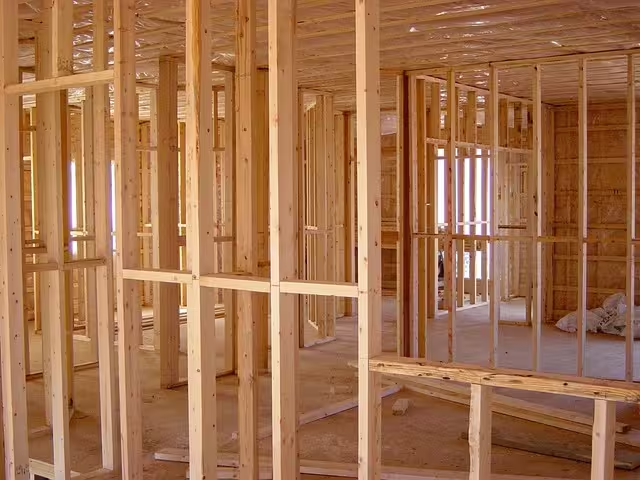
After the foundation is cured and the framing is complete, your house finally starts to look like a house. The walls are up, the roof is on, and it’s an exciting time. This is also the moment for the second major construction inspection phase, often called the framing or pre-drywall inspection. This inspection takes place after the complete framing, rough-in plumbing, electrical wiring, and HVAC ductwork are all installed, but before the insulation and drywall cover everything up. It is a comprehensive look at the home’s skeleton and all the vital systems that run through it.
The inspector has a very long checklist for this construction inspection. From a structural standpoint, they will examine the wood framing, checking for proper stud spacing, correct header sizes over windows and doors, and ensuring the trusses and beams are installed according to the engineering plans. They will verify that the house is properly anchored to the foundation.
For the mechanical systems, they will look at the plumbing lines to check for leaks and proper support. They will inspect the electrical wiring to ensure it is the correct gauge, properly secured, and that outlet boxes are placed correctly and not overcrowded. They will look at the HVAC ductwork to see that it is sealed and insulated properly for energy efficiency.
This detailed construction inspection also includes the exterior. The inspector will check the installation of windows and doors, looking for correct flashing and sealing to prevent water intrusion. They will examine the wall sheathing and the house wrap, which serves as the home’s weather barrier. This is the only opportunity to truly see what is behind your walls. A poorly supported pipe could become noisy, a nicked wire could be a fire hazard, and an improperly flashed window could lead to a slow leak that causes rot and mold for years before it’s ever discovered. A thorough pre-drywall construction inspection ensures all the systems you rely on every day are safe, functional, and installed correctly.
Phase 3: The Final Inspection (Pre-Closing Walkthrough)
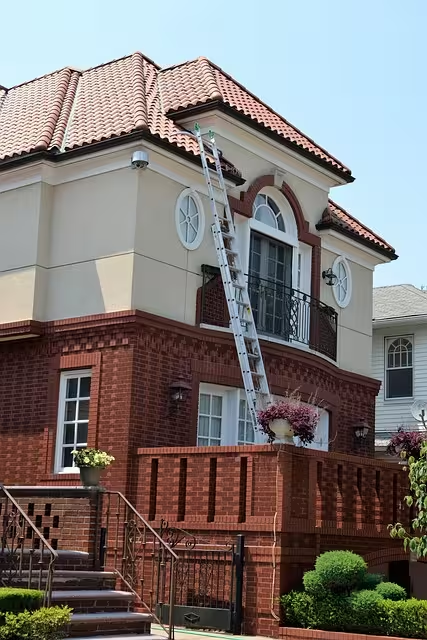
The final construction inspection is the one most people are familiar with. It happens when the home is complete, just before your final walkthrough with the builder and prior to closing on the property. This is the most extensive and detailed construction inspection of all, as it covers every finished surface and functional component of the house. The goal is to identify any issues, from minor cosmetic flaws to major functional problems, that need to be addressed by the builder before you officially take ownership.
During the final construction inspection, the inspector will operate like a meticulous detective, testing everything in the home. They will turn on every light fixture, test every electrical outlet, and run every faucet and shower to check for leaks and proper water pressure. They will run the HVAC system in both heating and cooling modes to verify it works correctly. They will operate all kitchen appliances included with the home. On the safety front, they will check for required safety features like handrails on stairs, functional smoke and carbon monoxide detectors, and properly installed ground fault circuit interrupter (GFCI) outlets near water sources.
The inspector will also assess the overall fit and finish of the home. They will look for defects in the paint and trim, check for any scratches or gaps in the flooring, and inspect the cabinetry and countertops. Outside, they will examine the final grading of the property to ensure water drains away from the house, look at the condition of the siding and roofing, and inspect sidewalks and driveways for proper finish. They will also venture into the attic and crawl space to check for adequate insulation and ventilation, which is critical for energy efficiency and preventing moisture buildup.
Following this comprehensive construction inspection, you will receive a detailed report. This report forms the basis of your “punch list,” which is the list of items for the builder to correct before closing. Completing a final construction inspection is your last chance to have issues resolved by the builder on their dime.
Once you close, the responsibility becomes yours. This final step ensures you receive a home that is not just beautiful, but also safe, complete, and fully functional, ready for you to move in. It’s the last quality gate before the keys are in your hand. This is also when the local building authority will perform their final construction inspection to issue the all important Certificate of Occupancy, which officially deems the home safe and livable.
Hiring Your Own Expert: The Role of a Third-Party Inspector
Throughout the building process, your home will be inspected by a municipal inspector from your local code enforcement office in Johnson City or the surrounding county. Their role is very specific: to ensure the home meets the minimum safety and structural standards required by the local building code. They work for the city or county, not for you. While they are a critical part of the process, they are often managing a heavy workload and can only spend a limited amount of time at each job site. Their focus is on code compliance, not necessarily on the quality of workmanship or the finer details.
This is where hiring your own private, third-party inspector becomes an invaluable decision. A private inspector’s sole responsibility is to you, the homebuyer. You are their client, and their job is to protect your interests. They go beyond the basic code requirements to look for issues with quality, workmanship, and long term durability that a municipal inspector might not flag. They can take the time to do a much more in depth construction inspection at each phase.
For example, they might notice that a brand of plumbing fixtures the builder used has a reputation for failing early or that the siding was installed in a way that, while technically up to code, could lead to problems in our region’s climate.
When should you hire a private inspector? The best approach is to have them conduct their own construction inspection at each of the three critical phases we have discussed: pre-pour, pre-drywall, and final. You are essentially adding a dedicated expert to your team whose only job is to advocate for the quality of your home.
The cost of hiring a third-party inspector for these phased reviews is a tiny fraction of your total investment in the home, but the value they provide in catching potential issues is immeasurable. They provide a detailed, unbiased report at each stage, giving you the documentation and leverage needed to discuss any concerns with your builder from a position of knowledge. It is one of the smartest investments you can make in the entire home building process.
Your Role in the Inspection Process
As the homebuyer, you are the most important person on the team. While you hire experts like builders and inspectors, your involvement is key to a successful outcome. The first step is to stay informed. Ask your builder for a construction schedule and make note of the planned dates for each major construction inspection. This allows you to know what is happening and when. Whenever possible, make arrangements to be present for the construction inspection, especially the final one. Walking through the property with the inspector allows you to see what they see and ask questions in real time. It is a fantastic learning experience that will help you understand your new home on a much deeper level.
Do not ever be afraid to ask questions. A good builder and a good inspector will be happy to explain what they are doing and why. If you do not understand a term they use or a concern they point out, ask for clarification. Remember, this is your future home, and there are no silly questions when it comes to ensuring it is built correctly. Your curiosity and engagement show your builder that you are a proactive partner in the process.
Finally, document everything. Keep a dedicated folder or digital file for all your home building paperwork. This includes your contract with the builder, any change orders, and, most importantly, every construction inspection report you receive. Take your own photos during site visits, especially of things you have questions about. This documentation creates a clear and detailed record of your home’s construction. In the vast majority of cases, the build will go smoothly. But if a dispute does arise, having a well organized record of every report and communication will be crucial to reaching a fair resolution. Your active participation in the construction inspection process transforms you from a spectator into a knowledgeable and empowered homeowner.
Conclusion: Building Confidence in Your Tri-Cities Home
The path to building a custom home is a detailed one, but it does not have to be intimidating. By understanding the critical checkpoints along the way, you can ensure the final product meets your every expectation. The phased construction inspection process, broken down into the essential foundation, pre-drywall, and final stages, is your quality assurance system. It is the best method for catching potential issues early, ensuring compliance with safety codes, and verifying quality workmanship before it is too late or too costly to fix.
Embracing this process, staying involved, and considering the addition of a trusted third-party inspector to your team are the most effective steps you can take to protect your investment. A proactive approach to the construction inspection is not about mistrusting your builder; it is about reinforcing that trust through verification. It ensures that every part of your home, from the hidden foundation that supports it to the visible finishes you will enjoy every day, is built with integrity.
Ultimately, a thorough construction inspection provides the confidence and peace of mind you deserve, allowing you to turn the key on your new Tri-Cities house knowing, without a doubt, that you are truly home.


