A custom home is one of the biggest projects a family can take on. For many women, you are the one making sure every detail is right for your family. You are the one thinking about the long term health of your children and the stability of your monthly budget. One of the biggest choices you will make early on is where your water comes from.
In 2026, the choice between municipal water and a private source is more complex than it used to be. The cost to drill a well versus having a city water hookup has changed because of new technology and rising utility rates. I want to help you understand this choice with precision and care.
Our goal is to give you the facts so you can feel confident in your decision. We will look at the math, the geology of our beautiful East Tennessee mountains, and the daily reality of owning a well.
The High Stakes of Hydration
Building a home in the Tri-Cities is a dream for many. We have the beauty of the Appalachian Mountains right in our backyard. But that beauty comes with unique challenges below the ground. When you are looking at your site plan, you have to decide if you want to be tied to a city line or if you want to drill a well. In 2026, many families are choosing to drill a well because they want to be independent. They want to know exactly what is in their water.
Others prefer city water because it feels simpler. They do not want to worry about a pump or a tank. We see both sides. The cost to drill a well versus having city water is often the deciding factor. It is not just about the money you spend today. It is about what you will spend over the next twenty years. If you decide to drill a well, you are making an investment in your land. If you choose city water, you are paying for a service.
Modern filtration has changed the game. Even if you drill a well in an area with hard water, we can make that water feel like a spa experience. On the other hand, city water is treated and safe, but prices in Sullivan and Washington counties have been rising. Let us break down the details so you can make the best choice for your household.
Upfront Costs: The Financial Barrier to Entry
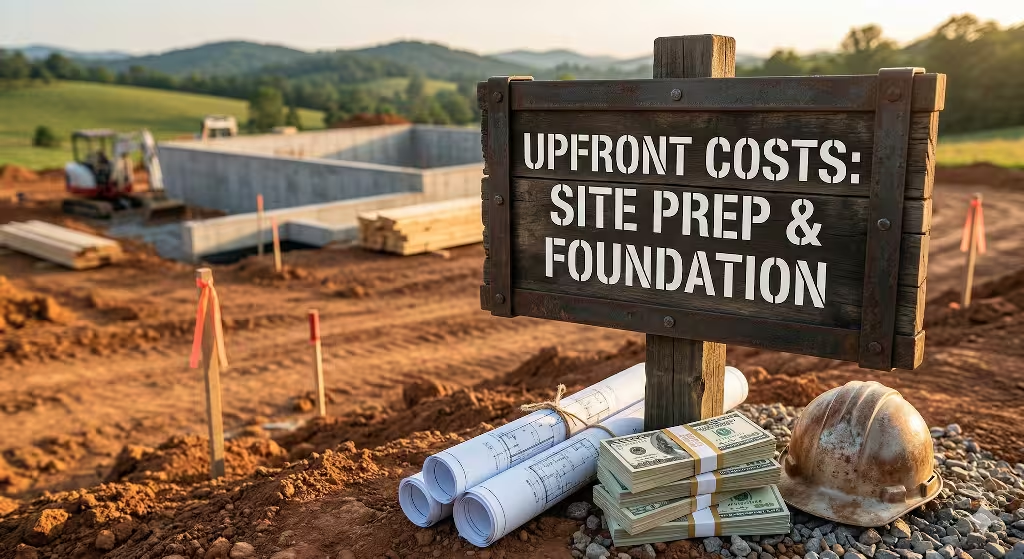
The first thing you will notice is the price tag. City water often feels cheaper at the start. Most cities in our area have a set fee to tap into their line. This is called a tap fee. In Johnson City or Kingsport, this fee covers the labor to connect your house to the main pipe under the street. In 2026, these fees have gone up. You might pay $2,000 or $4,000 just to get started. If your house is far from the road, you also have to pay for the long pipe that runs to your door.
When you decide to drill a well, the cost is different. You are paying for a crew to bring a big machine to your property. They have to drill deep into the earth. In the Tri-Cities, we have a lot of limestone. This rock is hard, and it takes time to get through it. When you drill a well, you pay by the foot. If you hit water at 100 feet, you save money. If you have to go to 400 feet, the price goes up fast.
You also have to buy the equipment. You need a pump that sits deep in the ground. You need a pressure tank in your basement or garage. You also need a liner, which we call a casing, to keep the hole from caving in. When you drill a well, you are buying a whole system. By 2026, the total cost to drill a well usually falls between $8,500 and $18,000. It is a big check to write upfront. But once you drill a well, the water itself does not cost you a dime every month.
Operating Costs: Monthly Bills vs. Maintenance
After your home is built, the costs do not stop. If you have city water, you will get a bill every single month. This bill usually includes your water use and your sewer use. In many parts of Tennessee, the sewer bill is actually higher than the water bill. Over ten years, those monthly payments add up to a lot of money. If you use a lot of water for a garden or a pool, your bill will be even higher.
When you drill a well, you do not get a monthly bill. You do have to pay for the electricity to run the pump. Many buyers find that this only adds about five or ten dollars to their electric bill. However, you are now the manager of your own water utility. If the pump breaks, you have to fix it. If the tank leaks, that is on you.
We advise buyers to keep a small savings account for their well. If you put away a little bit of money each year, you will be ready if the pump needs a repair in fifteen years. Even with these maintenance costs, it is usually much cheaper to drill a well over a long period. You are trading a small monthly bill for a large repair cost that only happens once in a blue moon.
Regional Specifics: Geology and Law
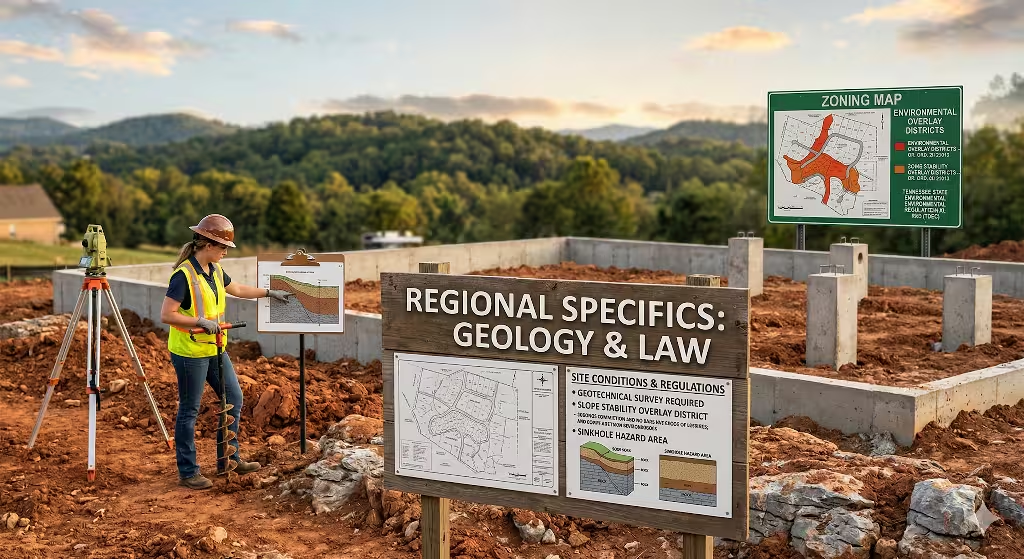
The Tri-Cities area has very special ground. We live in what geologists call a Karst region. This means we have a lot of limestone and underground caves. This is why our landscape is so beautiful with its rolling hills. But it means that when you drill a well, the water might be a bit “bubbly” or “cloudy” at first. We call this turbidity. It is just tiny bits of rock and dirt in the water.
Because of our geology, the state of Tennessee has rules about where you can drill a well. You cannot drill a well too close to your septic tank. You also have to be a certain distance from your neighbor’s property line. In 2026, the Tennessee Department of Environment and Conservation has updated their maps. They want to make sure our groundwater stays clean.
When you drill a well here, you also have to think about minerals. Our water is often “hard,” which means it has a lot of calcium. It is not bad for you to drink, but it can leave spots on your dishes. It can also be tough on your hair and skin. Most people who drill a well in Johnson City or Bristol also install a water softener. This makes the water feel much better. It is an extra cost, but it makes your home feel much more luxurious.
Answers to Common Questions about Wells
There are a lot of questions from families who are trying to decide if they should drill a well. Here are some of the things people ask the most in 2026.
Is well water safer than city water?
The truth is that both can be very safe. City water is tested every day by experts. They use chemicals like chlorine to kill germs. When you drill a well, the safety is your responsibility. I suggest you test your water once a year. Modern wells are very deep and very safe from surface pollution. Many people prefer well water because it does not have the chemicals that cities add.
Does a well add value to my home in Tennessee?
Yes, it often does. In 2026, more people want to be self sufficient. A home that has its own water source is seen as more secure. If the city water lines break or have a problem, you still have water. This peace of mind is worth a lot to buyers. If you drill a well, make sure you keep good records of the drilling and the water tests. This helps when it is time to sell.
Can I have both city water and a well?
Technically, yes, but it is expensive and requires special plumbing. You cannot let the two systems mix. This is because well water could accidentally flow back into the city lines. You would need a special valve called a backflow preventer. Most people just choose one or the other. If you have a large garden, you might drill a well just for your plants and use city water for your house.
What happens if a well runs dry?
This is a common fear, but it is rare in East Tennessee. We get a lot of rain here. However, if a well does slow down, there are things we can do. We can use a process called hydro-fracking to open up new cracks in the rock. Or, we can simply drill a well deeper. In my thirty years of experience, I have very rarely seen a well go completely dry in the Tri-Cities.
The Verdict: The 10-Year Break-Even Point
So, which one should you choose? It often comes down to how long you plan to live in the home. I like to look at the ten year mark. If you choose city water, your upfront cost is low, but your monthly costs are steady. If you drill a well, your upfront cost is high, but your monthly costs are almost zero.
Usually, the money you save on monthly bills will pay for the cost to drill a well in about seven to nine years. After that point, your water is essentially free. If you are building your “forever home” where you plan to stay for twenty years or more, it is almost always better to drill a well. You will save thousands of dollars over the life of the home.
On the other hand, if you are building a smaller home and you think you might move in five years, city water might be the smarter choice. You won’t have to wait for the savings to kick in. You also won’t have to worry about the maintenance of the pump while you are trying to sell the house.
Precision in Planning
When you are ready to start, you need to talk to a professional. Not every lot is perfect for a well. As an engineer, I look at the slope of the land and the nearby rock formations. You want to drill a well in a spot that is easy to reach but far enough away from any contamination.
In the Tri-Cities, we have great local drillers who know this land. They know where the water usually sits. When you decide to drill a well, you are taking control of one of the most important parts of your home. Water is life. Having a clean, reliable source of your own is a wonderful feeling.
Remember, the decision is a balance of today’s budget and tomorrow’s freedom. Take your time with this choice. Talk to your builder and your spouse. Look at your long term goals. Whether you choose the city or you drill a well, make sure it fits the way you want to live.
The Mechanics of Drilling
When you finally decide to drill a well, it is quite a process to watch. A large truck with a tall mast arrives at your property. This is the drill rig. It uses a heavy bit to grind through the soil and rock. As they drill a well, they use air or water to blow the rock chips out of the hole. This is a messy job, so be prepared for some mud on your construction site.
The first part of the hole is usually wider. This is where the casing goes. The casing is a steel or plastic pipe that lines the top part of the well. This is very important because it keeps the topsoil and surface water from falling into your clean drinking water. When we drill a well, we have to make sure the casing is sealed tightly into the bedrock. This is often called “grouting.” It is a safety step that you should never skip.
Once the casing is set, the crew will continue to drill a well deeper into the rock. They are looking for “fissures” or cracks in the limestone that hold water. When they hit a good stream, they measure how many gallons per minute the well can produce. For a standard family home, we like to see at least five gallons per minute. If the flow is lower, we might need a larger storage tank inside the house so you don’t run out of water during a long shower.
The Pump and Pressure System
After you drill a well, you aren’t finished yet. You need a way to get the water from 300 feet underground up to your kitchen sink. This is where the submersible pump comes in. This pump is a long, thin cylinder that is lowered deep into the water. It has an electric motor that pushes the water up a pipe to your house.
Inside your home, usually in a basement or a closet, you will have a pressure tank. This tank is very important. It holds a small amount of water under pressure. When you turn on the faucet, the tank pushes the water out immediately. This keeps the pump from having to turn on and off every time you wash your hands. If the pump turns on too often, it will wear out faster. A good pressure tank protects your investment after you drill a well.
In 2026, we are seeing more “constant pressure” systems. These use smart electronics to speed up or slow down the pump based on how much water you are using. If you are running the dishwasher, the washing machine, and the shower all at once, the system knows to work harder. It makes your well water feel just like city water. There is no drop in pressure when someone else turns on a tap.
Water Quality and Treatment
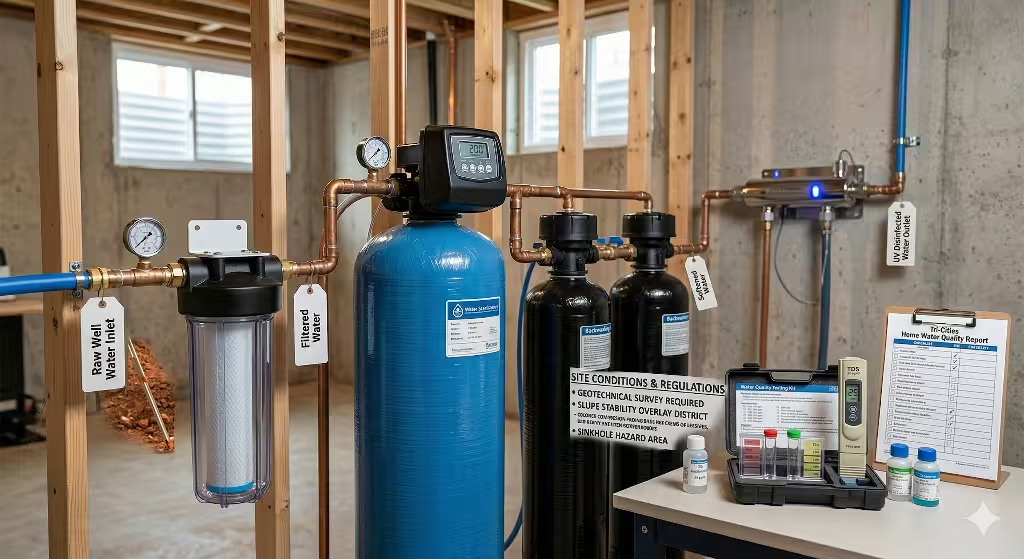
Many people worry about the taste of the water when they drill a well. In the Tri-Cities, our water is generally very clean. However, it can have a lot of minerals. Because we have so much limestone, the water picks up calcium and magnesium. This is called hard water. It can make your skin feel dry or leave white crusty stuff on your faucets.
When you drill a well, you should always get a full water test. This test looks for minerals, bacteria, and other things like iron or sulfur. If your water smells like rotten eggs, that is usually sulfur. It is not dangerous, but it is unpleasant. The good news is that we can fix almost any water problem with a filter.
Modern filtration systems are very small and very quiet. You can have a system that softens the water and removes any smells. Some families also add a reverse osmosis filter under the kitchen sink for the best tasting drinking water. When you drill a well, you have the power to customize your water exactly how you like it. You can’t do that with city water.
Comparing the Infrastructure
When you choose city water, you are relying on a massive network of pipes and pumps managed by the local government. In places like Johnson City, this infrastructure is aging. While the city works hard to maintain it, there can be water main breaks or “boil water” alerts. These things are out of your control.
When you drill a well, your infrastructure is much smaller. It consists of your pump, your pipe, and your tank. You are responsible for it, but you also have total control over it. If there is a problem, you can call a local well expert and have it fixed the same day. You don’t have to wait for the city to fix a line three miles away.
In 2026, we are also seeing more people think about “smart homes.” You can now buy sensors that monitor your well pump. These sensors can send a message to your phone if they detect a leak or if the pump is working too hard. This makes the job of managing your own water much easier than it was twenty years ago. It gives you the precision you need to keep your home running smoothly.
Environmental Impact
For the environmentally conscious woman, the choice to drill a well can be very rewarding. Well water is a local resource. It comes from the ground right beneath your feet. It doesn’t have to be pumped for miles through city pipes using large amounts of energy. It also doesn’t require the large scale chemical treatments that city water needs.
When you drill a well, you are also more likely to be careful with your water. Since you know it is your own personal supply, most families become more aware of how much they use. This helps conserve our beautiful Tennessee groundwater. Also, the water you use inside your house usually goes into a septic system, where it is filtered by the earth and eventually goes back into the ground. It is a natural cycle.
However, you must be careful about what you put on your lawn. If you drill a well, you should avoid using heavy pesticides or fertilizers near the well head. You want to keep the area around your well as natural as possible. This protects your family’s health and ensures your water stays pure for years to come.
Planning for the Future
As you look at the cost to drill a well vs. city water hookup 2026, think about the next twenty or thirty years. We are seeing utility prices go up all across the country. By choosing to drill a well now, you are locking in your water costs for the future. Even if the price of city water doubles, your cost remains the same.
This is a form of financial security. When you are retired or on a fixed income, not having a water bill is a huge benefit. It is one less thing to worry about. For many of the women I work with, this long term security is the most important factor. They want to know that their home will be affordable and safe for their children and grandchildren.
If you are currently looking at a piece of land in Sullivan or Washington County, I encourage you to do your homework. Check to see if city water is even available. If it is, get a quote for the tap fee. Then, call a local driller and ask for an estimate to drill a well in that area. Having both sets of numbers will help you make a logical, precise decision.
Making the Right Choice for You
There is no one right answer for everyone. The choice to drill a well is a personal one. It depends on your budget, your land, and your lifestyle. If you value independence and long term savings, you will likely want to drill a well. If you value a low upfront cost and want someone else to handle the maintenance, city water is probably better for you.
We are here to tell you that either choice can lead to a wonderful home. The Tri-Cities is a great place to live, and we are lucky to have good water resources here. Our job is to make sure you have the facts so you don’t have any surprises during your build.
Building a home is a journey. It requires patience and a calm mind. Don’t let the big decisions overwhelm you. Take them one step at a time. Whether you decide to drill a well or hook up to the city line, you are creating a sanctuary for your family. That is the most important goal of all.