

A Hidden Gem Tucked Along King Springs Road
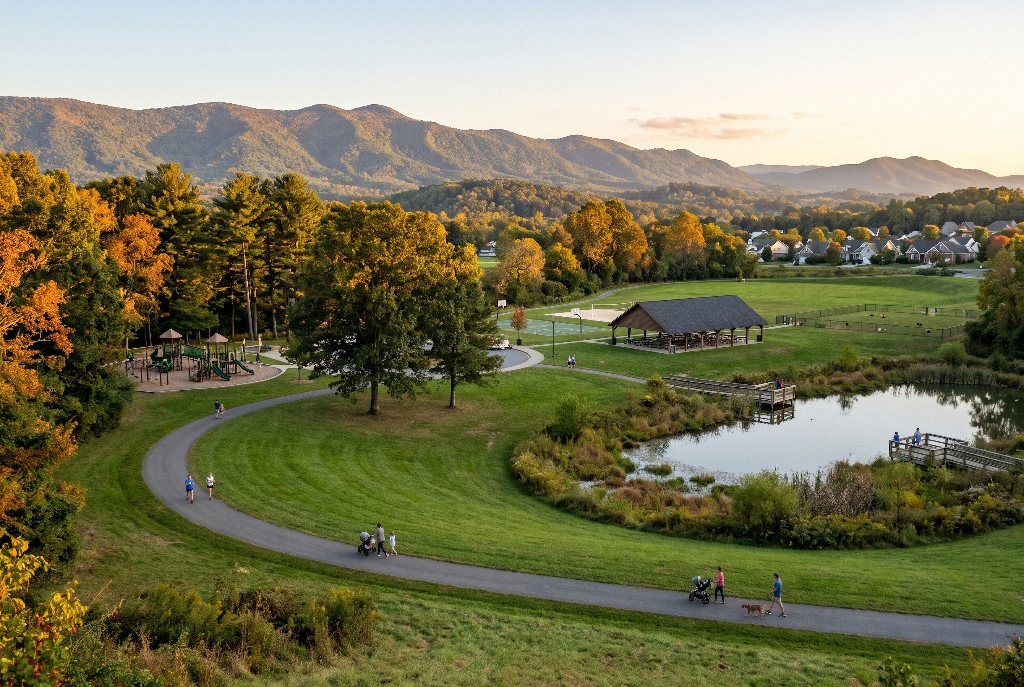
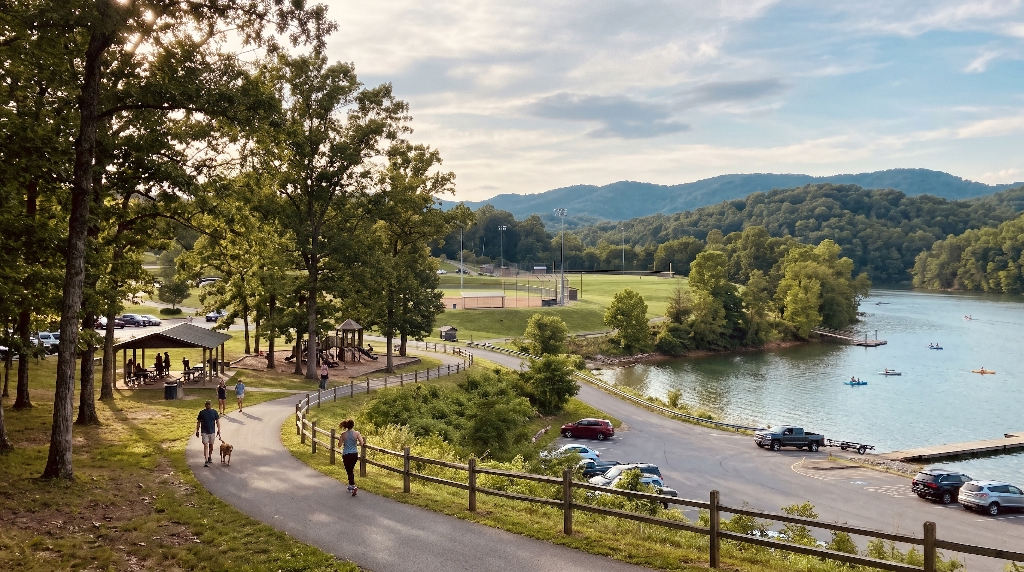
When you step out of your car on King Springs Road, the hum of city life begins to fade. Just a few miles from the busy center of Johnson City, Tennessee, lies a quiet green refuge known as Jacob’s Nature Park at Sinking Creek. This
From a design and biology standpoint, nature has an extraordinary power to restore human focus and calm our nervous systems. Scientists call this biophilia, which simply means our natural human urge to connect with other living things. Jacob’s Nature Park was built with this exact connection in mind. The park does not rely on loud playgrounds or paved sports courts. Instead, it invites visitors to listen to the soft murmur of water, watch butterflies flutter across native wildflowers, and breathe in the rich scent of damp earth and moss. For anyone seeking a quiet retreat in the Tri-Cities region, Jacob’s Nature Park provides an easy, welcoming escape into the beauty of East Tennessee.
The Story Behind the Sanctuary: Honoring Jacob Francisco
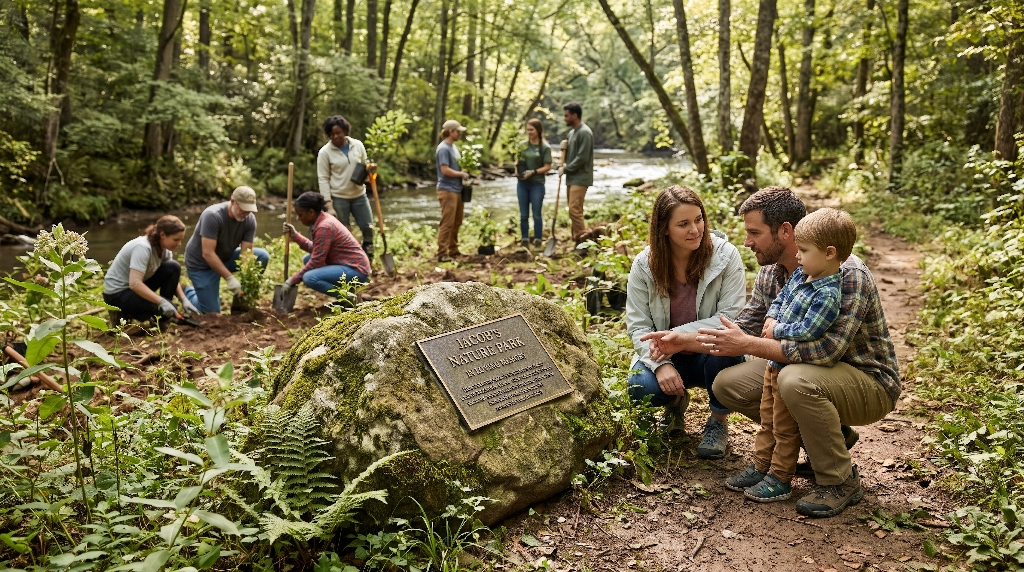
Every great park has a purpose, but Jacob’s Nature Park holds a story that touches the heart of our entire community. The park was created in loving memory of Jacob Francisco, a bright and energetic six-year-old boy who passed away in 2004 from an infection caused by E. coli bacteria. His loss shook Johnson City, but his family chose to channel their deep grief into an enduring gift of health, ecological restoration, and education for future generations.
Turning Grief into Environmental Renewal
Water is the lifeblood of our valleys, but running water can also carry pollutants when land is not treated with care. In the early 2000s, Sinking Creek suffered from runoff issues and degraded banks. Jacob’s parents, Bill and Juanita Francisco, envisioned transforming the floodplains along the creek into a protected sanctuary. By establishing Jacob’s Nature Park, they turned a personal tragedy into a living beacon of watershed recovery. The preserve allows the natural wetlands to filter storm runoff, protect downstream waterways, and remind the public that clean water requires active care and respect from all of us.
A Community United for Conservation
Creating Jacob’s Nature Park was truly a team effort that brought people together across our region. The Francisco family worked hand in hand with the
An Outdoor Classroom for All Generations
Learning is most powerful when it happens outdoors under the open sky. Jacob’s Nature Park functions as a real-world classroom where textbook lessons come alive. Local elementary school classes, scout troops, and college biology students regularly walk the trails to observe living ecosystems in action. Children can watch dragonflies dart over the creek or examine how tree roots hold stream banks together during heavy rain. By bringing students into direct contact with wildlife, Jacob’s Nature Park helps young minds develop a deep sense of stewardship for the natural heritage of Southern Appalachia.
Exploring the Trails and Distinct Park Features
A well-designed natural park allows visitors to explore without disturbing fragile plant communities. The pathways at Jacob’s Nature Park guide you gently through distinct natural zones, moving from open sunlit wetlands up into cool forest canopies.
Trail Layout and Terrain
The trail system at Jacob’s Nature Park measures between one and one and a half miles in total, making it accessible for walkers of all fitness levels. The paths consist mainly of packed earth, crushed stone, and wooden boardwalks that protect damp wetland soils. As you begin near the creek, the ground is flat and easy to walk. Sturdy wooden footbridges cross shallow trickles, allowing you to gaze directly down into the clear pools below.
If you want a bit more exercise, the trail loops upward onto the wooded hillside. This section features gentle slopes and shaded switchbacks beneath tall tulip poplars and oaks. The trail surface can become soft and damp after seasonal rains, but it remains one of the most pleasant, unhurried walking loops in Washington County.
The Living Roof Pavilion and Outdoor Classroom
One of the most impressive architectural features in Jacob’s Nature Park is the open-air shelter built with a living green roof. Instead of using standard metal or asphalt shingles, builders topped the pavilion with living plants, soil, and drainage layers. A green roof absorbs rainwater, cools the air during hot summer afternoons, and creates extra foraging ground for pollinators. The structure uses natural timber posts and a crushed-stone floor that blend seamlessly into the surrounding woods. It serves as an ideal resting spot where hikers can unpack a lunch, sketch in a field journal, or listen to a naturalist presentation sheltered from the midday sun.
The Native Tree Arboretum
As you hike through Jacob’s Nature Park, you will notice neat markers placed next to various trees and shrubs. These signs identify native Appalachian species, turning an ordinary morning stroll into an arboretum tour. You can spot the broad, tropical-looking leaves of the native pawpaw tree, which produces sweet green fruits in late summer. You will also see river birch trees with their distinctive peeling bark, fragrant spicebush shrubs along the creek edge, and witch hazel blooming late in the year. Labeling these species helps visitors recognize the native plants that belong in East Tennessee yards, encouraging homeowners to plant native species that support regional wildlife.
Wildlife and Wetland Ecology: A Certified Living Refuge
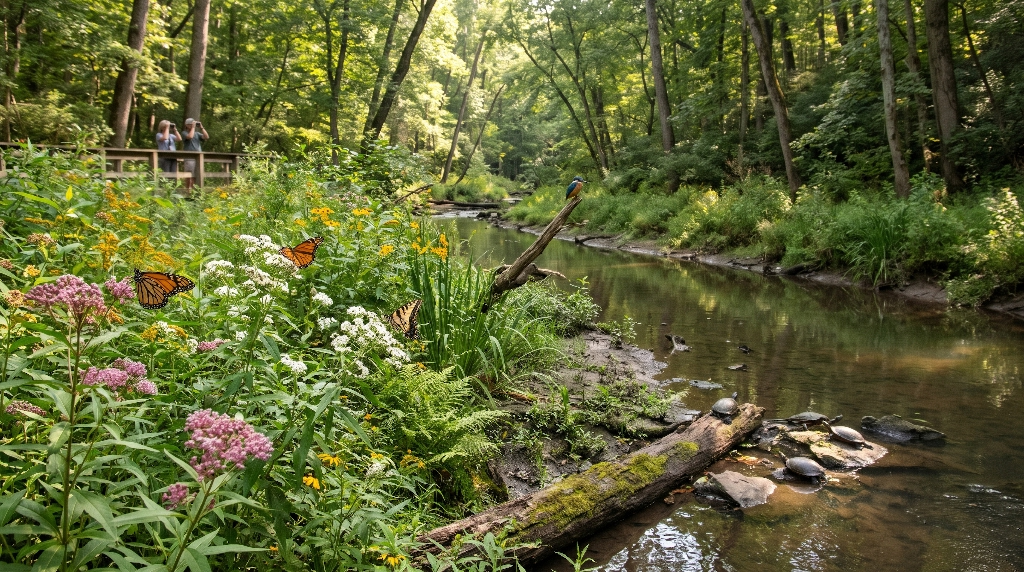
Wetlands are often called the kidneys of the landscape because they filter out silt and impurities from moving water. At Jacob’s Nature Park, the wetland basin acts as a natural sponge that traps sediment, absorbs floodwaters, and purifies the water before it flows farther downstream into the Watauga River basin.
National Wildlife Federation Certified Habitat
Due to its rich biodiversity and thoughtful care, Jacob’s Nature Park holds official certification as a wildlife habitat through the National Wildlife Federation. Unlike typical city parks with manicured lawns, Jacob’s Nature Park leaves native grasses, dead snag trees, and fallen logs in place whenever it is safe to do so. Decaying wood provides vital food and nesting chambers for beetles, woodpeckers, and fungi. By avoiding harsh chemical weed killers and providing clean water, shelter, and natural food, Jacob’s Nature Park ensures that wild creatures find a secure home in every season.
A Monarch Butterfly Waystation and Pollinator Haven
In recent years, pollinating insects have suffered from habitat loss across North America. Jacob’s Nature Park helps combat this decline by maintaining a registered Monarch Butterfly Waystation. The park features dedicated patches of native milkweed plants, including common milkweed and swamp milkweed. Milkweed is the only plant that monarch caterpillars can eat before transforming into adult butterflies. Alongside milkweed, blooms of goldenrod, ironweed, and boneset offer abundant sweet nectar throughout the summer and fall. During the late summer migration, visitors can often see bright orange monarchs and yellow swallowtail butterflies feeding side by side in the open meadows.
Creature Spotting Guide for Families
Walking quietly through Jacob’s Nature Park gives families a wonderful chance to spot local wildlife. Along the edges of Sinking Creek, you might catch sight of a harmless queen snake basking on a warm rock, searching for small crayfish. Eastern box turtles often wander through the damp leaf litter on the forest floor, while painted turtles bask on partially submerged logs. Bird lovers will hear the loud rattle of belted kingfishers patrolling the water, along with the steady drumming of downy and red-bellied woodpeckers among the upland trees. If you stop on a bridge and stay still for two minutes, you can watch schools of tiny native minnows holding position against the gentle current.
A Practical Guide: Visiting with Children, Dogs, and Loved Ones
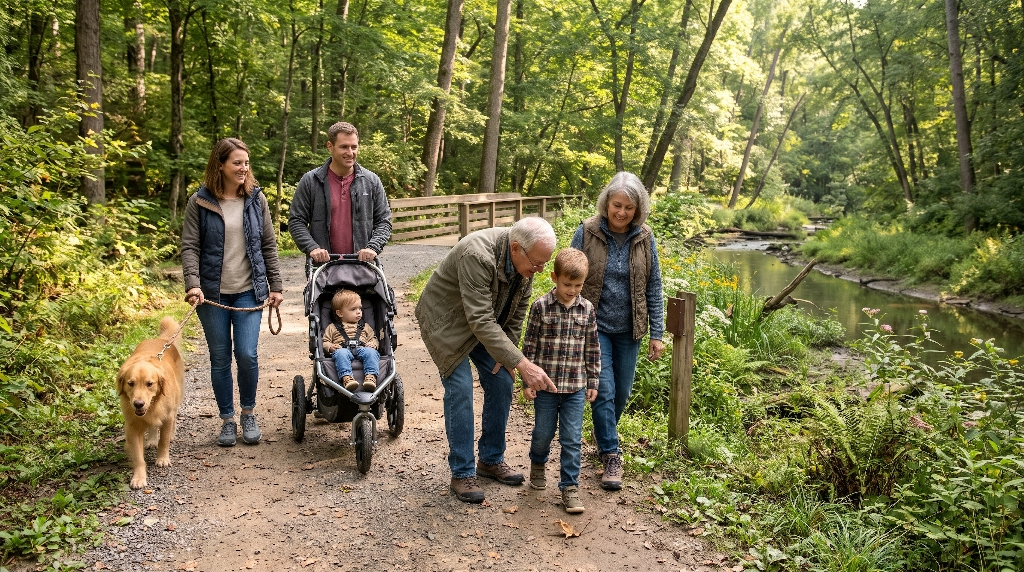
Visiting Jacob’s Nature Park is an easy, low-stress outing, but a little bit of preparation ensures your trip is enjoyable, safe, and restful for everyone in your group.
Navigating with Little Ones
Children naturally love discovering small wonders, such as acorns, smooth stones, and curious bugs. Jacob’s Nature Park is a fantastic destination for young explorers because the distances are manageable and the sights change constantly. If you bring a baby or toddler, a rugged jogging stroller with large air-filled tires will handle the dirt paths and roots with ease. Lightweight umbrella strollers with small plastic wheels will struggle on the natural terrain. Taking regular breaks at the living roof pavilion or resting on the rustic wooden benches keeps little legs from tiring out too quickly.
Important Safety Notes on Sinking Creek Water Quality
While the water in Sinking Creek looks tempting on warm summer days, safety must always come first. Parents and pet owners must remember that Jacob’s Nature Park was established to heal an impaired stream corridor. Sinking Creek drains both rural and urban areas, and water tests can still show elevated levels of bacteria, especially after heavy rains wash over upstream roads and pastures. For this reason, swimming, wading, and splashing in the creek are strictly forbidden for both people and pets. Teach your children to observe the water from the bridges and gravel banks. Packing a small bottle of hand sanitizer or wet wipes is a smart practice for cleaning up before enjoying a snack in the pavilion.
Pet Etiquette and Leash Guidelines
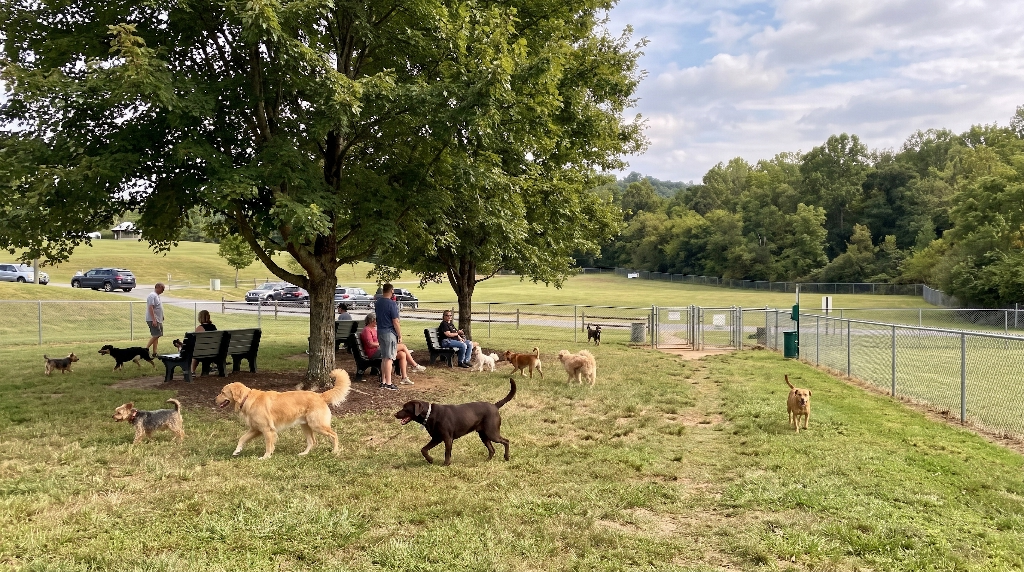
Dogs are welcome guests at Jacob’s Nature Park, but they must remain on a standard leash at all times. Keeping dogs leashed protects ground-nesting birds, rabbits, and turtles from being chased or injured. It also keeps your pet safe from poison ivy, thick briers, and potential bacteria in the creek water. Responsible pet owners should always carry clean waste bags and clean up after their animals immediately. By keeping the trails clean and quiet, dog owners help ensure that Jacob’s Nature Park remains pleasant and sanitary for every visitor.
Footwear and Pack Recommendations
Because the preserve sits in a low-lying creek bottom, ground conditions can be damp. Sturdy sneakers or waterproof hiking shoes with good tread are the best choice when visiting Jacob’s Nature Park, especially during the rainy spring months. In your day pack, bring a reusable water bottle, bug spray during midsummer, and a pocket field guide or smartphone loaded with a nature identification app like iNaturalist. Wearing light layers helps you stay comfortable as you move from the sunny butterfly gardens into the cool shade of the hemlock and tulip poplar woods.
Essential Visitor Details and Getting There
Planning a trip to Jacob’s Nature Park is simple once you know the basic layout and rules of the park.
Location and Directions
The official address for Jacob’s Nature Park is 1220 King Springs Road, Johnson City, Tennessee, 37601. The entrance is easy to spot along the road, marked by a clear wooden entrance sign. The park is located just a short drive from downtown Johnson City, Milligan University, and Interstate 26, making it convenient to add a nature walk to your daily errands or weekend outings.
Operating Hours
Jacob’s Nature Park follows seasonal daylight operating hours set by the Johnson City Parks and Recreation Department. From March through October, the park is open daily from 7:00 a.m. to 9:00 p.m., allowing visitors to enjoy early morning birding or peaceful evening golden hour light. From November through February, the gates close earlier, with operating hours from 7:00 a.m. to 7:00 p.m. Visiting during early morning hours often provides the best wildlife sightings and the most peaceful atmosphere.
Parking Advice
Parking at Jacob’s Nature Park is free, with a gravel parking area located right at the King Springs Road entrance. The parking lot holds about a dozen vehicles. On bright Saturday mornings and mild Sunday afternoons, spaces can fill up quickly with local walkers. If the primary lot is full, be patient or return during off-peak weekday hours. Always park only in designated spots so emergency vehicles and nearby residents have clear access to the roadway.
Accessibility Notes
The paths closest to the entrance and the approach to the living roof pavilion feature relatively level gravel and hard-packed ground, allowing good mobility under dry weather conditions. However, the upper loop trails contain natural soil, exposed tree roots, and moderate grade changes that may be challenging for traditional wheelchairs. Visitors who use mobility assistance devices will find the lower creek boardwalks and the pavilion area the easiest to navigate comfortably.
Frequently Asked Questions About Jacob’s Nature Park
Is there an entrance fee for Jacob’s Nature Park?
There is no admission fee to visit Jacob’s Nature Park. It is a completely free public park owned and maintained by the City of Johnson City for the enjoyment and health of the entire community.
Can you fish or swim in Sinking Creek?
No, fishing, wading, swimming, and pet bathing are not permitted anywhere along Sinking Creek inside Jacob’s Nature Park. These rules protect public health and give the aquatic habitat an undisturbed opportunity to recover and thrive.
Are there restrooms available on site?
Jacob’s Nature Park is managed as a low-impact natural preserve, so it does not feature permanent indoor restroom facilities. A portable restroom is sometimes provided seasonally near the parking lot, but visitors are encouraged to plan ahead and use public facilities in nearby commercial areas before arriving.
How long does it take to walk the trails?
Most people spend between forty-five minutes and an hour and a half at Jacob’s Nature Park. The short trail length makes it ideal for a quick thirty-minute fitness walk, but taking an hour allows you to read the tree signs, watch for birds, and fully relax in the pavilion.
Embracing Reflection and Renewal in the Tri-Cities
In our fast-moving world, quiet green spaces are more valuable than ever. Jacob’s Nature Park at Sinking Creek proves that modern communities can heal damaged landscapes and create spaces that feed the human spirit. What began as a family’s profound heartbreak has grown into a living sanctuary where thousands of people discover the wonders of East Tennessee ecology every year.
Whether you are looking to teach your children the names of native trees, observe migrating monarch butterflies, or simply take a deep breath among rustling leaves, Jacob’s Nature Park offers a peaceful haven. The gentle waters of Sinking Creek remind us that nature is resilient when given care and protection. The next time you find yourself near Johnson City, take an hour to wander the quiet trails of Jacob’s Nature Park, rest under the living green roof, and experience the quiet comfort of this special Appalachian treasure.